#002 — The IOC Scramble
ExxonMobil has boots on the ground again, Chevron and Shell are expanding, and the same 254 kbd USGC demand gap from Brief #001 is now pulling the majors back into Venezuela.
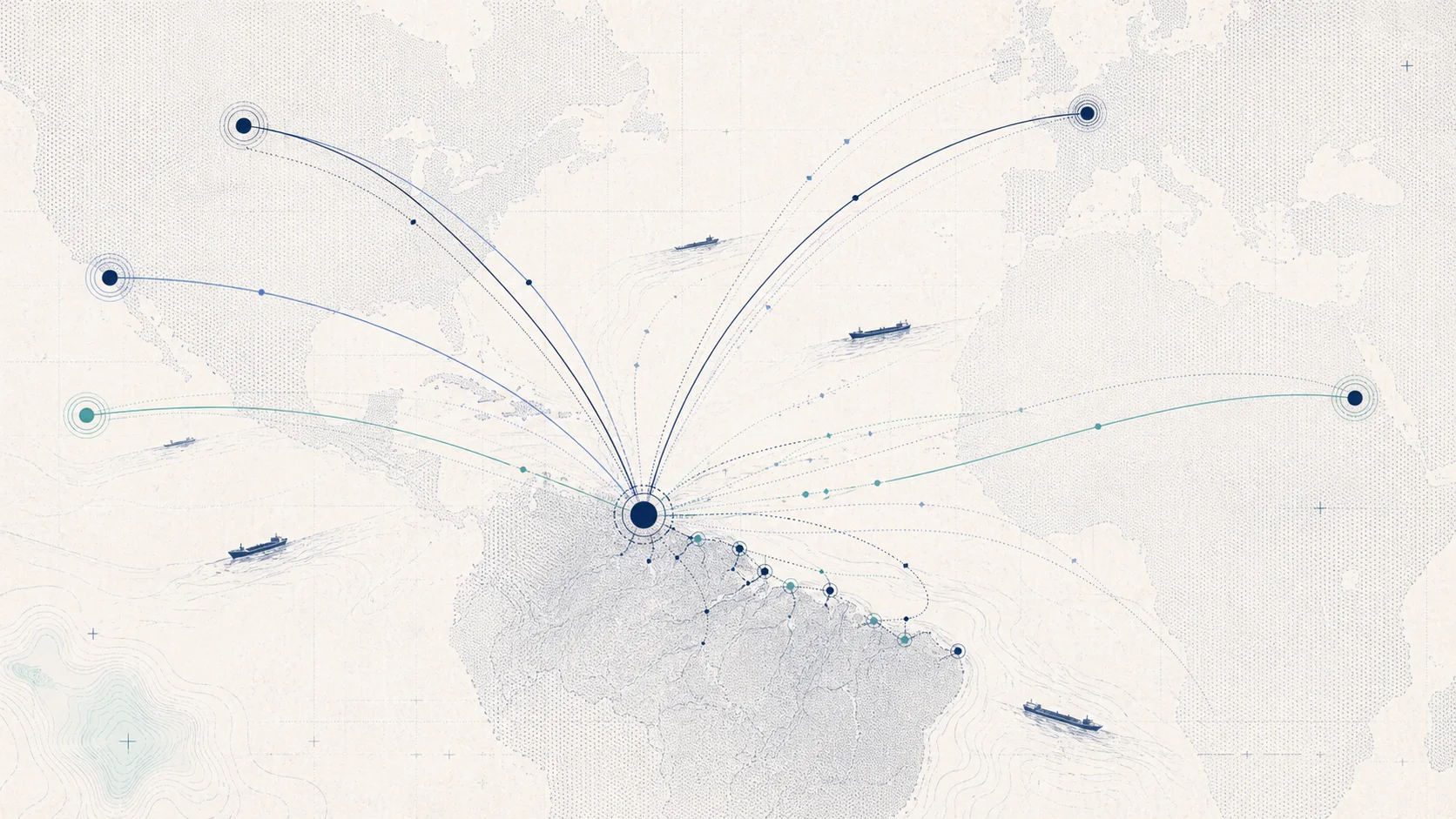
This week's read: now has a team on the ground in evaluating resources and infrastructure for the first time since nationalization. That is the cleanest signal yet that the market has moved from demand pull to supply response.
This is the natural sequel to : the same 254 kbd USGC heavy crude gap is still there. What changed is that the majors are now repositioning around it.
That still leaves Jose Terminal as the key loading node in the operating chain.
Situation: The Demand Thesis Is Now Showing Up as an IOC Response
argued that Venezuelan crude was being pulled back into the US Gulf Coast because competing heavy barrels were not replacing the lost Mexico+Iraq volumes. This week, the sequel is visible: international oil companies are returning to because the market now has room to absorb the barrels.
The operating logic is straightforward:
- USGC still needs heavy crude.
- Venezuela is the only producer adding meaningful barrels into that slot.
- A 1.1M bpd production baseline gives the majors something real to underwrite.
- Washington just widened the policy window again with broader OFAC licensing.
The result is not one company making a speculative visit. It is a broad repositioning across upstream, gas, refining, and investor access.
Key Facts: Production Has Moved From Recovery to Ramp
is still far below its historical peak, but it is no longer operating from collapse conditions. At 1.1M bpd, the question changes from "can output recover at all?" to "which operators want exposure to the next 200-400 kbd of growth?"
The production target for 2026 is still 1.3M bpd. The longer-term upside is much larger: historical peak output was 3.2-3.4M bpd, proved reserves remain around 303 billion barrels, and Machado's public rebuild pitch is explicitly framed around a 5M bpd system over a decade if capital and legal durability hold.
Analysis: What Is the Strategic Value for Each IOC?
Policy and Capital: Both Sides Are Courting the Same Money
The investor outreach is no longer subtle:
- Machado used Columbia CGEP and CERAWeek channels to pitch US IOCs on a long-horizon rebuild that could reach 5,000 kbd with roughly $150B over a decade.
- Delcy Rodriguez pitched investors directly at a Miami forum.
- OFAC widened the opening again, including minerals-related authorizations that now sit alongside the oil licenses.
| Signal | What Changed | Why It Matters |
|---|---|---|
| OFAC GL 52 | Broader Venezuela oil authorization | Expands what operators and counterparties can underwrite |
| OFAC GL 51A / 54 / 55 | Minerals and related service authorizations | Signals the opening is widening beyond crude alone |
| Machado investor pitch | US IOCs courted with 10-year rebuild thesis | Opposition is selling future scale directly to capital |
| Delcy Miami forum | Government side pitching investors | Both political channels now compete to attract the same money |
This is what makes the current moment different from a normal sanctions-relief bounce. The bid for capital is now visible from both the opposition and the state, while OFAC is creating a larger legal envelope around the trade.
Recommendation: Read This as a Supply-Chain Reordering, Not a One-Off News Cycle
The thesis from Brief #001 still holds: demand is pulling Venezuelan crude back into the Atlantic system. Brief #002 adds the next layer: that same pull is now reorganizing operator behavior inside Venezuela itself.
If this continues, the question shifts from "will Venezuela export more?" to three harder questions:
- Which company gets the next scalable growth tranche?
- Which basin or field gets capital first?
- Can the legal framework stay open long enough for scouting teams to become sanctioned investment committees?
Risks and What to Watch
The scramble is real, but it still has obvious failure modes:
- Legal durability risk: ConocoPhillips' hesitation is the market's cleanest warning that not every major is ready to cross from diligence to commitment.
- Infrastructure risk: ExxonMobil's own framing still points to years of rebuild work and very large capital needs.
- Execution risk: A 1.1M bpd baseline is meaningful, but getting from 1.1M to 1.3M is easier than getting from 1.3M to 2.0M.
- Policy risk: OFAC widened the lane this week; it can also narrow it later.
The operating signals to watch next are:
- Ayacucho 8 moving from preliminary terms to signed implementation
- ExxonMobil leaving diligence with a concrete pilot or JV posture
- Shell converting Monagas paper into field activity
- Repsol and Eni turning existing presence into larger production targets
- Total Venezuela production holding above 1.1M bpd and advancing toward 1.3M